Creating consistent and effective themes
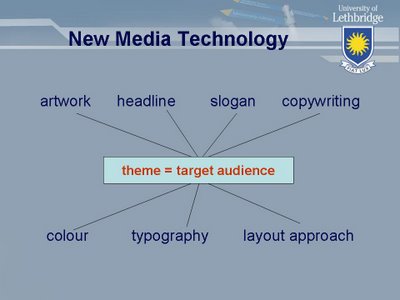
The diagram shows how to create a consistent and effective design theme throughout an advertisement or a web site page.
1. Identify your target audience. Once you have done so, then brainstorm and come up with a theme that is appealing to your target audience, and the message you wish to communicate.
Who is your target audience?
Consider their age range, education, gender(s), occupation, needs, aspirations, interests.
If you are designing a resume/portfolio web site, then your site should appeal to the needs of your employer - the exact person who makes the hiring decision. For example, if you are going into Environmental Policy, then you might come up with the following:
Primary Audience
Environmental policy: The hiring decision-makers tend to be 45+, have a Bachelors (wide range – management, business, environmental science), mostly male, possibly a CEO or director
Their needs are for a competent employee, who's good at public speaking, knows specific industry-related software applications, is able to work effectively on their own and communicates well
The employer's aspirations include: they want to look good by hiring an excellent employee, and who can satisfy many levels of government
Secondary Audience
These may include contracting companies, reclamation, oil companies, agricultural, and forestry companies
Friends & Family
2. What are some themes that could be employed in your web site?
It could be based upon your academic discipline or intended career such as:
Religious studies, mathematics, marketing, education, economics, finance, biology, computer science
Or it could be based upon personal interests such as skiing, soccer, music, art, volleyball
3. Brainstorm on what kinds of images and words come to mind when you think of your topic/theme
For example, if you decided to use volleyball, consider what does playing volleyball have in common with your career? Some ideas include: you're a team player, hard worker, dedicated and competitive. By using images of volleyball that suggest these qualities, then you can design a masthead using these images. Then with your introduction copywriting, you can tie in your abilities as an employee with the qualities of playing basketball.
4. Make each element of your advertising or web site consistent with your theme, and make sure each is appealing to your target audience.
These elements include: artwork, headling, copywriting, slogan, colour scheme, logo, page layout and typography. Each choice you make in these elements should reflect your theme.
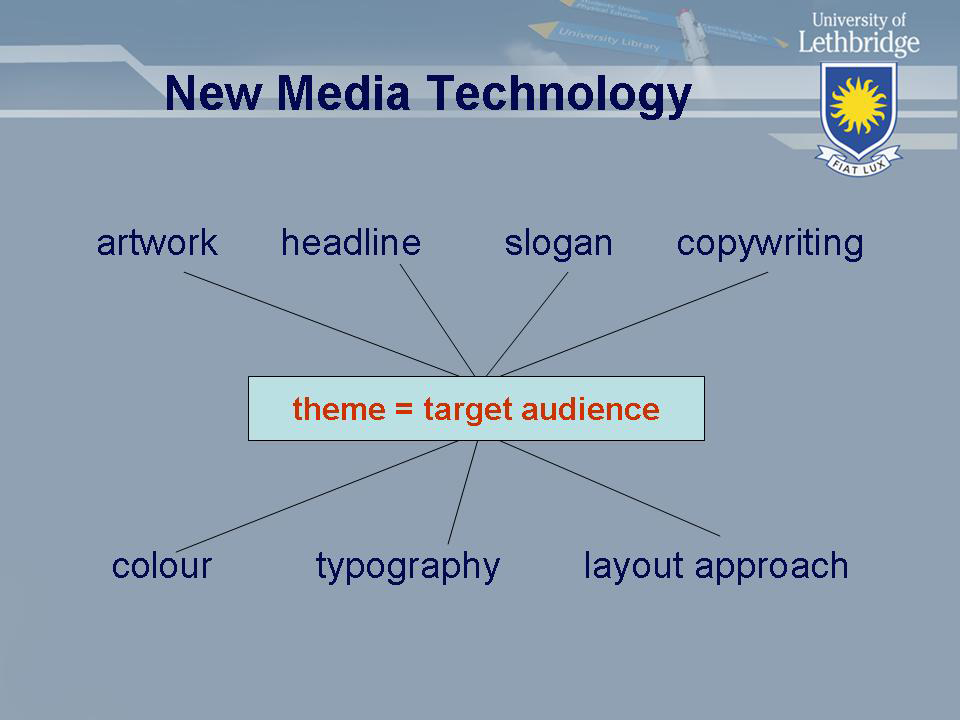
The diagram shows how to create a consistent and effective design theme throughout an advertisement or a web site page.
1. Identify your target audience. Once you have done so, then brainstorm and come up with a theme that is appealing to your target audience, and the message you wish to communicate.
Who is your target audience?
Consider their age range, education, gender(s), occupation, needs, aspirations, interests.
If you are designing a resume/portfolio web site, then your site should appeal to the needs of your employer - the exact person who makes the hiring decision. For example, if you are going into Environmental Policy, then you might come up with the following:
Primary Audience
Environmental policy: The hiring decision-makers tend to be 45+, have a Bachelors (wide range – management, business, environmental science), mostly male, possibly a CEO or director
Their needs are for a competent employee, who's good at public speaking, knows specific industry-related software applications, is able to work effectively on their own and communicates well
The employer's aspirations include: they want to look good by hiring an excellent employee, and who can satisfy many levels of government
Secondary Audience
These may include contracting companies, reclamation, oil companies, agricultural, and forestry companies
Friends & Family
2. What are some themes that could be employed in your web site?
It could be based upon your academic discipline or intended career such as:
Religious studies, mathematics, marketing, education, economics, finance, biology, computer science
Or it could be based upon personal interests such as skiing, soccer, music, art, volleyball
3. Brainstorm on what kinds of images and words come to mind when you think of your topic/theme
For example, if you decided to use volleyball, consider what does playing volleyball have in common with your career? Some ideas include: you're a team player, hard worker, dedicated and competitive. By using images of volleyball that suggest these qualities, then you can design a masthead using these images. Then with your introduction copywriting, you can tie in your abilities as an employee with the qualities of playing basketball.
4. Make each element of your advertising or web site consistent with your theme, and make sure each is appealing to your target audience.
These elements include: artwork, headling, copywriting, slogan, colour scheme, logo, page layout and typography. Each choice you make in these elements should reflect your theme.
posted by MJ at 12:46 PM


0 Comments:
Post a Comment
<< Home